
AI Keeps Inventing Fake Cases. Lawyers Keep Citing Them.
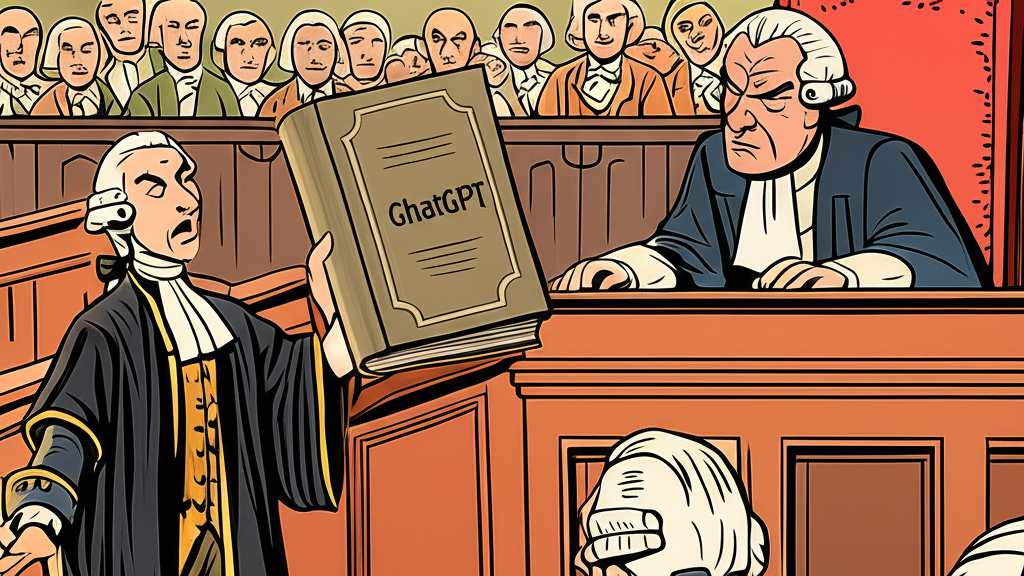
In April the Alabama Supreme Court sanctioned an attorney whose briefs contained citations to cases that did not exist. The justice’s concurring opinion documented something even harder to defend: after being told he had cited a fabricated case in one filing, the lawyer apologized, then dropped another nonexistent citation into the very next sentence. He was not the only attorney sanctioned that week for the same problem.
This is not a one-off. Damien Charlotin, a senior research fellow at HEC Paris, maintains a public database of court rulings that address AI errors in filings. The list now exceeds 1,400 cases over three years. After a steep climb through last fall, the rate has settled into what Charlotin calls a steady plateau of roughly 350 to 400 new decisions per quarter. The original reporting comes from Scientific American’s recent investigation, which lays out the pattern in detail.
For a law firm, the math here is brutal. A fabricated citation does not stay private. It ends up in a published opinion, in a sanctions order, in the legal press, and increasingly in the local newspaper. The reputational damage starts the moment the judge picks up the pen.
Why Otherwise Careful Lawyers Keep Trusting the Machine
The Scientific American piece quotes researchers who have started naming what is going on. Alan Wagner, an associate professor of aerospace engineering at Penn State, frames the underlying bias plainly: humans tend to assume machines have more knowledge than they do, that machines do not break, and that machines are infallible. AI also produces answers that sound plausible in a way humans rarely manage when they are wrong.
A February 2026 study run by researchers at Lancaster University in England drives the point home. Participants were asked to complete an image-classification task with guidance that was correct only half the time. Those told the guidance came from AI, and who held positive views of the technology, performed worse than skeptical participants. No similar effect appeared when participants believed the advice came from humans. The bias is specific to AI.
The Wharton School has a name for the deeper version of the problem: cognitive surrender. Researchers Steven D. Shaw and Gideon Nave ran experiments offering item-by-item feedback and cash rewards for correct answers. Both interventions reduced deference to faulty AI. Neither eliminated it. People kept handing the thinking over.
That is the heart of the law firm exposure. Associates working under deadline pressure, partners reviewing drafts at 11 p.m., paralegals trying to keep up with a Friday filing cutoff — these are exactly the conditions under which cognitive surrender takes hold. The output looks like a brief. The citations look like citations. Nobody pulls the case.
The Reputation Cost Lands Harder Than the Sanction
Court sanctions are public records. So are the judicial opinions that describe them, and legal reporters in markets like Charleston have been tracking these cases closely. A $5,000 fine is recoverable. A search result that pairs your firm’s name with “AI hallucination” and “fabricated authority” for the next decade is not.
Our content director, Joe Toppe, currently serves as managing editor of PropertyCasualty360, the trade outlet covering U.S. property and casualty insurance — a sector where carriers track legal-tech failures closely because every novel AI error pattern eventually becomes a malpractice underwriting question. The point is not abstract. The fact-checking discipline that newsrooms operating under the Society of Professional Journalists Code of Ethics build into every story is exactly what is missing from the AI-to-court-filing pipeline. Citations get pulled. Quotes get sourced. Statistics get traced back to a primary document. That is the floor in journalism. It is not yet the floor in legal drafting.
In the law firm sites we have audited, the firms that get into trouble are rarely the ones that adopted AI carelessly. They are the ones that adopted it without changing any of their downstream review processes. The technology slipped into the workflow. The verification step did not get added.
What Verification Looks Like in Practice
The Boston University team that “inoculated” students by warning them about ChatGPT’s limitations found something useful and uncomfortable. Warning participants that the chatbot summarized academic sources poorly increased verification rates on that task. The same warning had no significant effect on math problems, because participants came in trusting AI math. Awareness alone does not produce the behavior change.
What does work is structural: a verification step that lives in the workflow, not in someone’s good intentions. Every citation gets pulled. Every quote gets sourced. The associate who drafted the brief is not the associate who verifies it. The verification step gets its own slot on the calendar, not the final 20 minutes before filing.
When I teach the Business Law unit at Greenville Technical College, the recurring lesson is that procedural discipline is what separates competent practice from sanctionable practice. The medium changes. The principle does not. A bench memo built on a fabricated case is the same problem as a brief built on a misread statute, only faster to produce and harder to spot.
This is not anti-AI. It is anti-cognitive-surrender. The technology can draft a section in two minutes that would have taken two hours. That speed is real. The speed is also the source of the trap.
When an Error Does Make It Into a Filing
Crisis communication for this category of mistake follows the same rules as any other public-record event involving a professional firm. Acknowledge the error directly. Do not let opposing counsel or a reporter define the narrative for you. Do not blame the tool. The judge is not interested in the tool. The judge is interested in why a member of the bar signed a brief without verifying it.
The firms that handle these moments well tend to do three things. They publish a short, direct statement on their own site under their own name. They put a verification protocol in place going forward and say so plainly. They stop talking about it after the statement. The firms that handle it poorly try to argue that the AI made them do it, which has not landed well in any opinion we have read.
For Greenville-area practices in particular, where the legal community is small enough that reputation travels through bar association events and referral networks within days, the response window is tighter than the docket window.
The Bottom Line
AI hallucinations in legal filings are no longer an anomaly. They are a steady, plateaued pattern that produces public sanctions, public opinions, and durable search-result damage. The firms that protect their reputations build verification into the workflow as a separate step, owned by a separate person, with its own slot on the calendar. The firms that do not are betting that the plateau bends downward before their name lands on it.
If your firm needs help building a defensible content and communication process — one that holds up to both judicial scrutiny and the tightened E-E-A-T evaluation Google is now applying to legal sites — Toppe Consulting’s law firm public relations practice works with attorneys across South Carolina and the country.
About the Author
Jim Toppe is the founder of Toppe Consulting, a digital marketing agency specializing in law firms. He holds a Master of Science in Management from Clemson University and teaches Business Law and Marketing at Greenville Technical College. Jim also serves as publisher and editor for South Carolina Manufacturing, a digital magazine. His unique background combines legal knowledge with digital marketing expertise to help attorneys grow their practices through compliant, results-driven strategies.
Disclaimer
Toppe Consulting is a digital marketing and public relations agency for law firms. We are not a law firm, and nothing in this article is legal advice. For guidance on professional responsibility, AI use in legal practice, or sanctions exposure, consult a licensed attorney in your jurisdiction.
Recent Industry News
AI Keeps Inventing Fake Cases. Lawyers Keep Citing Them.

South Carolina Healthcare Workforce Faces a New Era of AI and Workforce Pressure

Law Firm DEI Hiring: Federal Actions in 2025 and 2026
ABA DEI Rule for U.S. Law Schools Repealed by Council