
The Supreme Court Tariff Case: What Business Owners Need to Know
Toppe Consulting – Your Source for Digital News & Trends in the Legal Industry
The Supreme Court is weighing a case that could eliminate billions in tariffs and trigger refunds for American businesses. A decision is expected as early as February 20, 2026, and small business owners should understand what happens next.
What the Court Is Deciding
At issue: whether the president can impose sweeping tariffs using the International Emergency Economic Powers Act (IEEPA). Lower courts ruled the tariffs unlawful. Political strategists give a 70% chance the Supreme Court agrees, according to J.P. Morgan Asset Management.
The financial stakes are enormous. According to legal analysis, more than $133 billion in tariffs collected under IEEPA could potentially be refunded if the Court rules against the administration. Businesses that paid duties on goods from China, India, Brazil, and other countries may be entitled to recover those payments.
The U.S. Chamber of Commerce outlined the situation in its January 2026 Small Business Update. If the Court strikes down IEEPA tariffs, the average statutory tariff rate would drop from 16.1% to 10.4%. Countries like India, Brazil, and Switzerland would see the biggest relief.
Getting Refunds Will Be Complicated
But business owners should prepare for complexity, not simplicity. During oral arguments, Justice Barrett called the recovery landscape a mess. Companies that want refunds may need to navigate specialized customs protest procedures through the Court of International Trade.
Cash flow pressures make this case especially significant. Cash Flow Crisis: Why Small Businesses Are Struggling This Year. Many businesses took on expensive debt specifically to pay tariffs now under challenge.
Replacement Tariffs May Follow Quickly
The administration has promised replacement tariffs within 24 hours if the Court rules against IEEPA. Section 122 of the Trade Act of 1974 allows 15% tariffs for 150 days. Section 301 investigations could target specific countries. The trade landscape may shift rather than stabilize.
The U.S. Chamber reports that affordability and interest rates remain major concerns for small businesses heading into 2026. Rate cuts may come later in the year, but the Federal Reserve is moving cautiously to avoid reigniting inflation.
The broader impact on small businesses has been severe. How Tariffs Are Crushing Small Businesses in 2026 — And What Owners Can Do. Whether through refunds or continued uncertainty, the Court’s decision will shape 2026 business planning.
For new law firms, these economic pressures affect potential clients and firm operations alike. Building a strong online presence becomes essential when referrals slow and competition intensifies. Toppe Consulting helps solo practitioners and small firms establish professional websites designed to convert visitors into consultations.
About Toppe Consulting
Toppe Consulting provides digital marketing services exclusively for law firms. Our team helps solo practitioners and small firms compete online through professional websites, SEO, and targeted advertising.
About the Author
Jim Toppe is the founder of Toppe Consulting, a digital marketing agency specializing in law firms. He holds a Master of Science in Management from Clemson University and teaches Business Law and Marketing at Greenville Technical College. Jim also serves as publisher and editor for South Carolina Manufacturing, a digital magazine. His unique background combines legal knowledge with digital marketing expertise to help attorneys grow their practices through compliant, results-driven strategies.
Works Cited
“How Could the Supreme Court Ruling Affect Tariffs?” J.P. Morgan Asset Management, 2026, am.jpmorgan.com/us/en/asset-management/adv/insights/market-insights/market-updates/on-the-minds-of-investors/how-could-the-supreme-court-ruling-affect-tariffs/.
Fallon, Nicole. “Small Business Update: What SMBs Need to Know About the Economy, Taxes, and AI in 2026.” U.S. Chamber of Commerce, 22 Jan. 2026, uschamber.com/co/events/small-business-update/small-business-update-2026-economic-outlook-tax-changes-and-ai-trends.
Related Articles
Recent Industry News

Your Next Client Is Already Searching. Educational Content Is How They Find You.
Greenville’s Bar Is 126 Years Old. Charleston’s Was Already 201 When It Opened
AALS Convenes National Task Force as the Rules for Becoming a Lawyer Come Apart
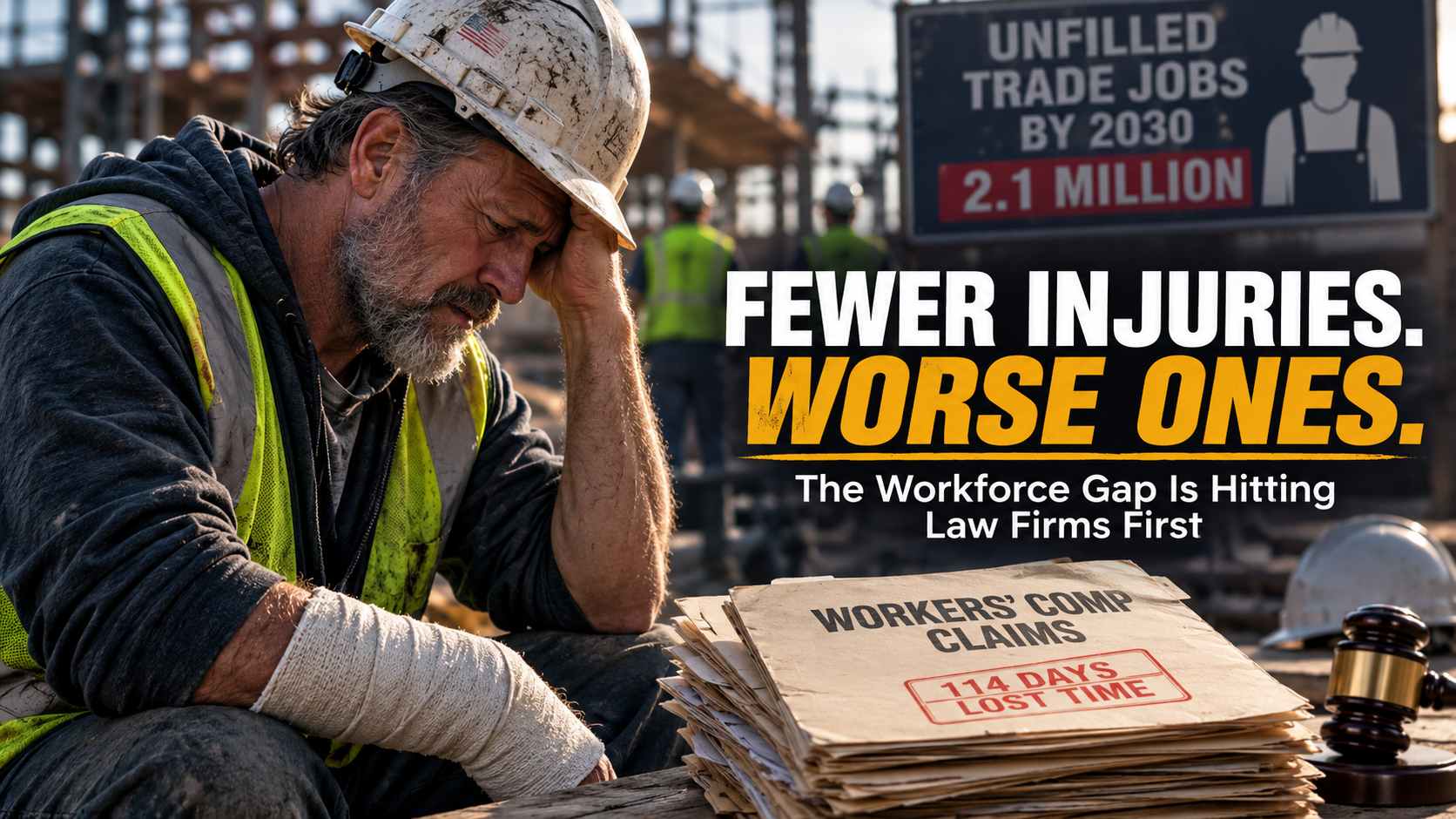
Five Retire, Two Replace: The Trades Gap Is Quietly Rewriting Injury Caseloads