
Law Firm Blog Rules: What Makes Attorney Content Worth Reading and Safe to Publish
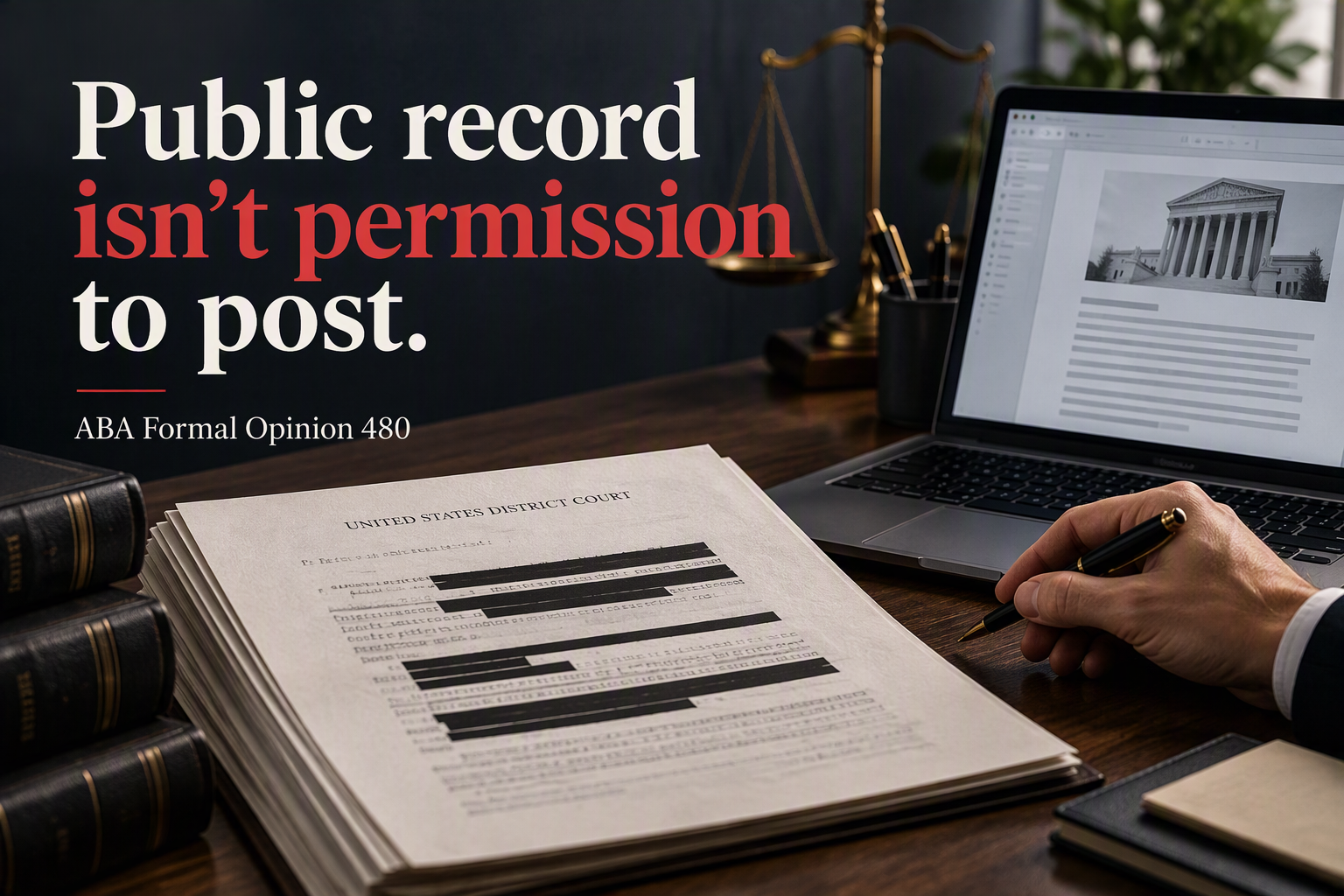
Every law firm blog post is a public statement by a lawyer, and a lawyer’s duty of confidentiality does not pause for content marketing. The American Bar Association said so in Formal Opinion 480, issued March 6, 2018. Lawyers who blog may not reveal information relating to a representation unless the Model Rules authorize it, and that includes information found in a public record.
A second standard comes from Google. Its guidance on creating helpful, reliable, people-first content says its systems give even more weight to content with strong experience, expertise, authoritativeness, and trust when the topic could significantly affect a person’s health, financial stability, or safety. Google calls these “Your Money or Your Life” topics, and most legal questions touch at least one of those three.
A blog is one channel in a law firm marketing plan. These two standards decide whether it builds trust or creates risk.
What Can a Lawyer Write About on a Law Firm Blog?
A lawyer can write about changes in the law, court rules, deadlines, common client questions, and how a legal process works. Under ABA Formal Opinion 480, a law firm blog may not reveal information relating to a client’s representation without informed consent or another exception in the Model Rules, even if that information is in a public court record.
Three Confidentiality Traps in Attorney Blogging
The public-record trap. A verdict reported in the local paper is still information relating to the representation. Opinion 480 rejects a public-record exception and notes that even a client’s identity is protected under Model Rule 1.6.
The hypothetical trap. Labeling a post as a hypothetical does not cure a disclosure if a reader could reasonably identify the client or the situation from the facts. The opinion says a hypothetical should be built so that identification is unlikely. It cites an Illinois public defender suspended for 60 days after blog posts referred to clients by first name or jail identification number.
The comment-section trap. Interactive posts invite readers to describe their own legal problems. A footnote in the opinion suggests a disclaimer stating that reading the content does not create an attorney-client relationship.
Lawyers handling a pending matter face one more limit. Model Rule 3.6 restricts public statements that have a substantial likelihood of materially prejudicing the proceeding, and the opinion points to it directly.
Who, How, and Why: Google’s Three Questions
Google’s guidance frames quality as three questions. Who created the content? Google encourages accurate bylines that lead to more information about the author. How was it made? Where automation or AI played a meaningful role, Google suggests telling readers. Why does it exist? Content made mainly to attract search visits does not match what Google’s systems aim to reward.
The same page lists warning signs, such as summarizing what others say without adding value, writing to a target word count, and changing a page’s date when its content has not meaningfully changed.
For a law firm blog, that translates into four habits: a byline from the attorney who wrote or reviewed the post, a short bio with verifiable credentials, a citation to the statute or rule being discussed, and a date that changes only when the content does.
Should a Lawyer’s Name Be on Every Law Firm Blog Post?
Yes, where the lawyer actually wrote or reviewed it. Google’s helpful content guidance encourages accurate bylines that lead to information about the author, and a named, accountable lawyer also supports the trust readers look for on legal topics. A byline should be truthful: it should not credit a lawyer who had no role in the post.
Human-Written Content From Toppe Consulting
Google’s “How” question is one Toppe Consulting answers plainly. Content for Toppe clients is written by people, not generated by AI, under the direction of Content Director Joe Toppe. Joe is a Managing Editor at PropertyCasualty360 and a former Associate Producer and Writer at Fox Business Network, and he holds a Master’s Degree in Journalism and Mass Communication from Kent State University. Each piece starts with an interview with the attorney, so the post reflects the lawyer’s own experience and practice.
Writing Within the Limits
A blog costs writing and review time rather than ad spend, which is why it appears in our guide to low-cost marketing for lawyers. Written within these limits, each post adds to what the firm has published rather than to its risk.
Toppe Consulting: Digital Marketing for Small Law Firms
Toppe Consulting works exclusively with solo practitioners and small law firms. Content is written in-house by Joe Toppe, a Managing Editor at PropertyCasualty360 and former Fox Business Network writer. No long-term contracts, and a clear quote upfront.
Our Services Include:
- Law Firm Content Writing — Practice area pages and posts written in-house by a working journalist
- Law Firm SEO — Practice area pages and content built around how clients actually search
Starting from scratch or starting over?
Contact Toppe Consulting for a quote with no contract attached.
About the Author
Jim Toppe is a co-founder of Toppe Consulting, a digital marketing agency that works exclusively with law firms. He has 10 years of experience in digital marketing for law firms, holds a Master of Science in Management from Clemson University, and teaches Business Law and Marketing at Greenville Technical College. Jim is also the publisher of South Carolina Manufacturing, a digital magazine. He brings his background in business law and marketing to websites, content, and search strategies built with attorney advertising rules in mind.
Works Cited
American Bar Association Standing Committee on Ethics and Professional Responsibility. Formal Opinion 480: Confidentiality Obligations for Lawyer Blogging and Other Public Commentary. American Bar Association, 6 Mar. 2018, www.americanbar.org/content/dam/aba/administrative/professional_responsibility/ethics-opinions/aba-formal-opinion-480.pdf.
Google Search Central. “Creating Helpful, Reliable, People-First Content.” Google for Developers, developers.google.com/search/docs/fundamentals/creating-helpful-content. Accessed 3 Oct. 2026.
Toppe Consulting provides digital marketing services to law firms. This website does not offer legal advice.
Bar advertising rules vary by state and change over time. Confirm current requirements with your state bar.
Related Articles
- How to Build a Law Firm Marketing Plan: A 2026 Guide for Solo and Small Practices
- Law Firm Website Checklist: The Features Every Attorney Site Needs in 2026
- Law Firm Website Updates: How Often, What to Check, and Why Accessibility Matters
- Low-Cost Marketing for Lawyers: Where a Solo Practice Should Spend First
Recent Industry News

Need Content Written by a Human? Meet Joe Toppe

Your Next Client Is Already Searching. Educational Content Is How They Find You.

Greenville’s Bar Is 126 Years Old. Charleston’s Was Already 201 When It Opened

AALS Convenes National Task Force as the Rules for Becoming a Lawyer Come Apart