
Commercial Fleet Electrification Gains Momentum, Yet Industry Remains in Early Innings
Commercial fleet electrification is accelerating across the U.S. However, industry leaders say the transition is still in its earliest stages. Meanwhile, technology, economics, and real-world use cases are finally beginning to align.
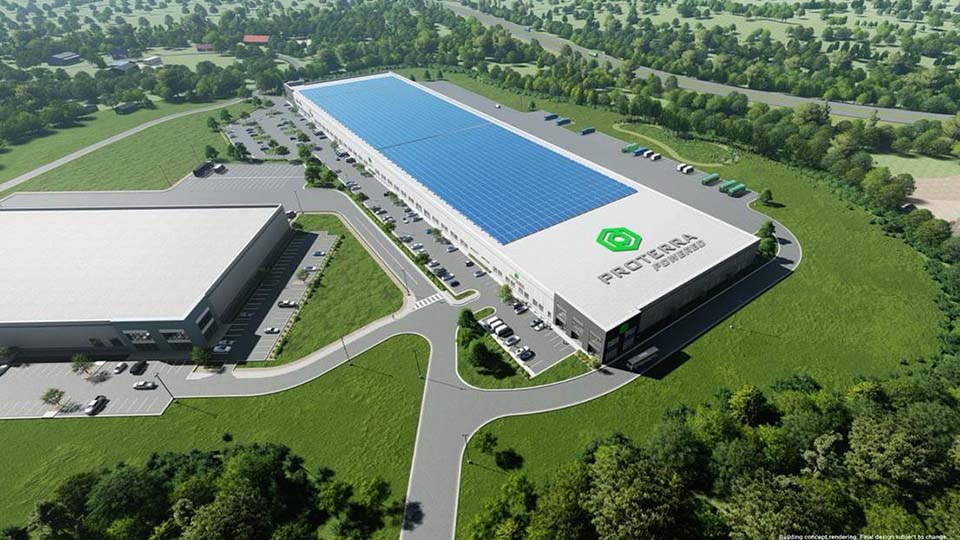
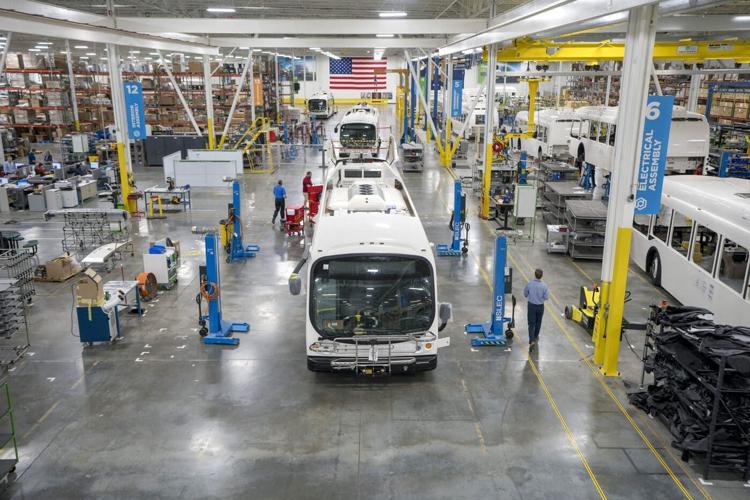
At a 300,000-square-foot manufacturing facility in Greer, South Carolina, Proterra produces battery systems for a wide range of commercial applications. These range from delivery trucks and school buses to excavators, mining equipment, and even highly specialized machines. Some of these machines operate underground and underwater.
“We’re a manufacturer of heavy-duty batteries for commercial vehicles and equipment,” said Chris Bailey, the company’s CEO. “You’ll see our products in everything from fire trucks and school buses to mining equipment a mile underground—and even an underwater bulldozer operating 160 feet below the surface.”
Commercial Fleet Electrification Is Still in Its Earliest Stage
Despite growing visibility, electrification across commercial fleets remains limited. Currently, roughly 13.9 million commercial vehicles operate on U.S. roads. However, electric technology adoption stays below one-half of one percent. This is especially true in heavy-duty segments.
“We are just at the very beginning of the adoption curve,” Bailey said. “The absolute numbers are still small, but the rate of change is what matters—and that’s accelerating.”
That acceleration is most visible in segments where routes are predictable. In addition, operations there can support centralized charging. As a result, delivery vans, medium-duty trucks, and transit buses lead adoption today. Meanwhile, service fleets are increasingly making the shift based on operational savings.
At the same time, electrification is expanding into less conventional categories. For example, heavy construction equipment, industrial vehicles, and specialized machinery are emerging as viable use cases. In some instances, electrification actually enables new applications rather than constraining them.
Barriers Beyond Technology
While battery performance continues to improve, the biggest obstacles to commercial fleet electrification are not purely technical.
“There’s still a psychological barrier and a trust factor,” Bailey said. “Many of the early adopters weren’t the traditional OEMs people were used to, and that slowed acceptance. There’s also been some politicization of the technology.”
Furthermore, infrastructure remains a critical constraint. This is especially true for long-haul and heavy-duty applications.
“If you solve the cost equation, you still have to charge the vehicle,” he said. “For long-haul operations, we simply don’t have the charging infrastructure in place yet along major corridors.”
According to the U.S. Department of Energy’s Alternative Fuels Data Center, public charging infrastructure has expanded rapidly in recent years. However, meaningful coverage gaps persist along major freight corridors.
As a result, adoption currently concentrates in “closed-loop” systems. These routes run between depots, distribution centers, or job sites where operators can control charging. Fortunately, advances in battery capacity are helping extend operating ranges. In fact, many vehicles can now run a full day before requiring a recharge.
The ROI Equation Is Shifting for Commercial Fleet Electrification
Electric commercial vehicles often carry a higher upfront cost. In some cases, the price runs two to three times that of diesel equivalents. However, operators are increasingly finding a different picture over time. Specifically, total cost of ownership (TCO) can be competitive—or even better.
“The most significant variable cost for fleet operators is fuel,” Bailey said. “At certain diesel price thresholds, you can reach total cost parity within five to ten years—and in today’s environment, we’re already there in many cases.”
In addition, battery lifecycle economics are evolving quickly and reshaping the math behind commercial fleet electrification. After eight to 12 years in a vehicle, many batteries retain 70–80% of their original capacity. As a result, this creates opportunities for second-life applications. However, accounting practices have yet to fully reflect that residual value.
Workforce and Manufacturing Evolution
As commercial fleet electrification scales, so does demand for new skill sets. For instance, facilities like Proterra’s rely on advanced manufacturing processes. These include robotics, laser welding, and highly specialized electronic assembly.
“You’re building a workforce for an industry that didn’t exist at scale a decade ago,” Bailey said. “It requires a combination of automation expertise, software integration, and advanced manufacturing engineering.”
To address that gap, companies are investing heavily in internal training programs. Additionally, they are forming partnerships with technical schools and engineering institutions. This is particularly true in regions like the Southeast, where manufacturing ecosystems are rapidly evolving.
What the Next Five Years Could Bring for Commercial Fleet Electrification
Looking ahead, industry leaders expect a clear shift in commercial fleet electrification. Specifically, the market will move from early adoption to broader, more practical deployment. This will be especially true in specialized and heavy-duty applications.
“We’re going to move from what’s possible to what’s practical,” Bailey said. “You’ll see increased adoption in specialty vehicles and equipment, along with new battery chemistries and technologies entering the market.”
Moreover, emerging battery types are expected to improve cost, safety, and performance. These include lithium iron phosphate (LFP), sodium-ion, and eventually solid-state. At the same time, continued investment in infrastructure and manufacturing scale will be critical to sustaining momentum.
For now, the trajectory is clear, even if the timeline remains fluid. Ultimately, the electrification of commercial fleets is no longer a question of feasibility. Instead, it’s a matter of execution.
About Toppe Consulting
Toppe Consulting is a digital marketing agency built specifically for solo practitioners and small law firms. We help attorneys compete with the big names through affordable, results-driven services. Specifically, our offerings include law firm website design, SEO, content writing, public relations, and Google Ads management.
Founded by twin brothers Jim and Joe Toppe, our team blends marketing expertise with serious journalism credentials. Jim holds a Master of Science in Management from Clemson University and teaches Business Law and Marketing at Greenville Technical College. Joe is Managing Editor at PropertyCasualty360 and a former Associate Producer and Writer at Fox Business Network. Together, they bring an investigative-journalist approach to every piece of content we produce.
We cover emerging industries like commercial fleet electrification because our clients’ practice areas often intersect with them. Whether you handle commercial vehicle litigation, manufacturing claims, or workplace injury cases, our team builds the digital presence your firm needs to reach those clients.
Ready to grow your practice without the big-agency price tag? Contact us today for a free consultation.
Recent Industry News

Your Next Client Is Already Searching. Educational Content Is How They Find You.

Greenville’s Bar Is 126 Years Old. Charleston’s Was Already 201 When It Opened

AALS Convenes National Task Force as the Rules for Becoming a Lawyer Come Apart

Five Retire, Two Replace: The Trades Gap Is Quietly Rewriting Injury Caseloads