
Law Firm Answer Engine Optimization
Home Services Law Firm SEO Law Firm Answer Engine Optimization
How Do I Get My Law Firm Cited in ChatGPT?
To get cited in ChatGPT, a law firm needs clear, well-sourced answers that AI platforms can verify and quote. Law firm answer engine optimization builds that through documented credentials and accurate sourcing. It needs consistent firm details across the web and content that answers real client questions. Generic FAQ blocks give AI systems little reason to choose your firm.
A worried spouse types “best divorce lawyer near me” into ChatGPT instead of Google. A business owner asks Perplexity or Gemini about a contract dispute. These platforms often skip the list of websites. They give one answer and cite the sources they trust. If your firm is not among those sources, prospective clients may never see your name at all. Toppe Consulting builds law firm answer engine optimization strategies around how AI platforms find, evaluate, and cite legal sources. The work is designed to give those platforms accurate, well-sourced reasons to include your firm in the answers prospective clients receive.
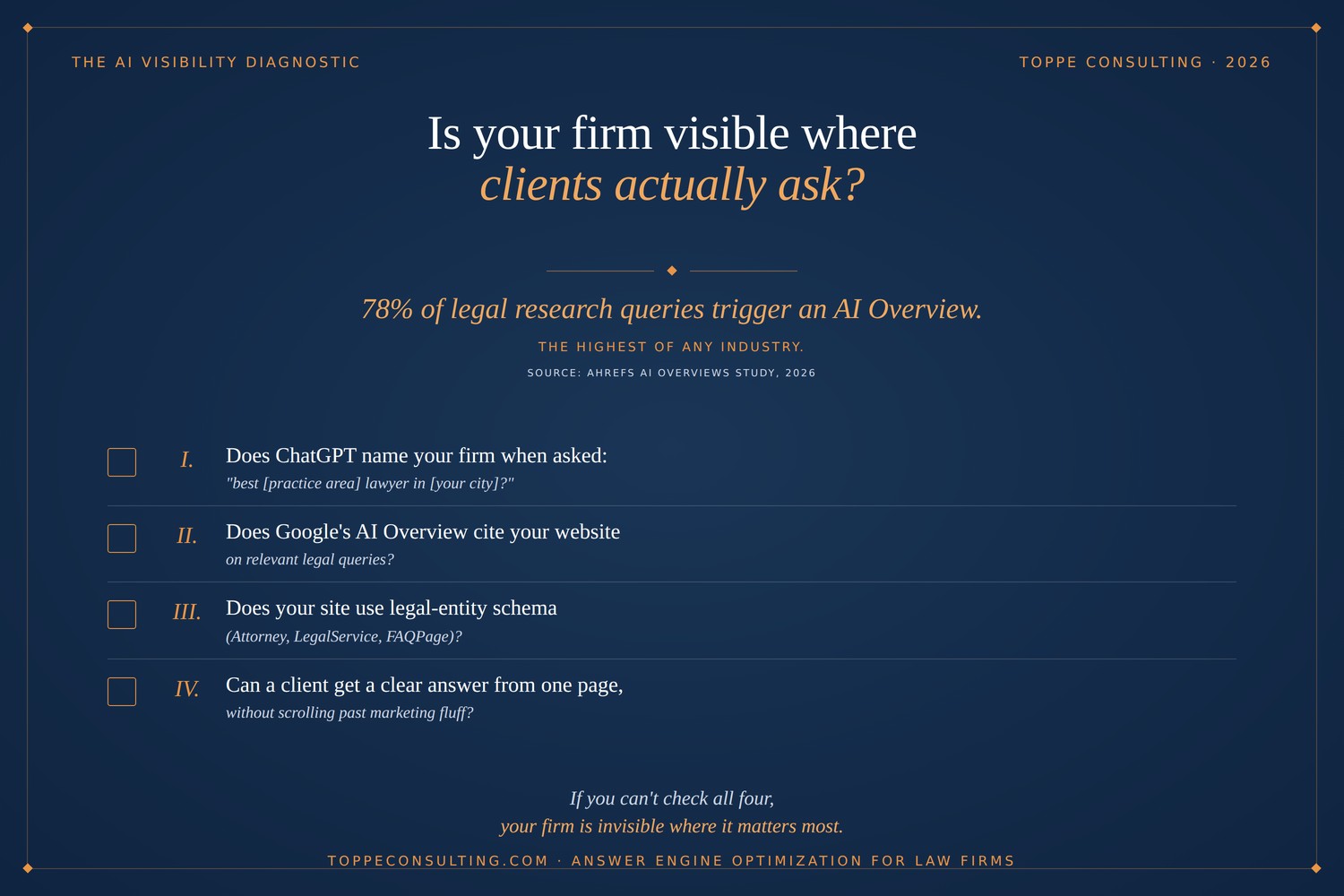
What Every Toppe Consulting Law Firm Answer Engine Optimization Engagement Covers
- AI visibility audits showing where your firm appears in AI answers today and where it does not
- Question-focused content development built around the specific legal questions prospective clients ask AI platforms
- Schema markup that communicates your specialties, locations, and credentials directly to AI systems
- E-E-A-T authority building across legal directories, local publications, and professional platforms
- Ongoing citation tracking that monitors how AI platforms reference your firm over time
- Review of every piece of AEO content against your state’s advertising rules
Contact Us Today to Get Started
How Much Does AEO Cost for a Law Firm?
AEO cost for a law firm depends on how much content needs building, how competitive the practice area is, and whether technical fixes such as schema and indexing come first. Toppe Consulting gives a clear quote upfront, with no hidden fees and no long-term contracts. You can start with a smaller scope and add services later.
Additional Options for Your Law Firm AEO Strategy
AEO performs best when every surrounding channel reinforces it. Toppe Consulting builds every additional service around your AEO foundation so your entire digital presence works together from day one.
Law Firm SEO. Traditional search and AI search draw on many of the same content and authority signals. Some AI platforms, including Gemini, lean on pages Google already ranks.
Generative Engine Optimization for Law Firms. GEO covers the broader signals AI platforms weigh when they generate answers to legal questions. AEO and GEO work together, so the same content serves both direct answers and longer AI-generated responses.
Law Firm Content Writing. AI platforms cite sources that demonstrate verifiable depth and documented expertise. Our content team produces practice area pages, attorney biographies, and location content built to E-E-A-T standards and your state’s advertising rules.
Law Firm Digital Marketing Solutions. AI visibility is easier to build when every channel tells the same story about your firm. Our digital marketing team aligns paid search, organic rankings, and AI visibility around the clients you want to attract and the practice areas where you compete.
Law Firm Answer Engine Optimization: What the ABA’s AI Data Shows
In the American Bar Association’s 2024 Legal Technology Survey, 30.2% of attorneys said their offices were using AI-based tools. Adoption ran highest at firms of 500 or more lawyers, at 47.8%, and lowest among solo practitioners, at 17.7%, according to the ABA’s 2024 AI TechReport. ChatGPT was the AI platform respondents cited most often.
That gap matters for small firms. The attorneys least likely to use AI themselves may also be the least aware of how prospective clients use it. ChatGPT is open to anyone with a legal question, and law firm answer engine optimization is built for that moment.
Is AI Search Actually Replacing Google for Legal Consumers?
Not replacing, at least not yet. Google still handles most searches, while AI tools such as ChatGPT and Gemini have become an added place to research legal questions. Many people use both. That makes AI search an extension of traditional search rather than a substitute. Firms that build for both give prospective clients two ways to find them.
How Law Firm Answer Engine Optimization Connects to Your Digital Foundation
AEO does not replace your existing marketing — it extends it into the AI search channels where a growing share of potential clients begin their legal research. Your law firm website development provides the content foundation AI platforms draw from directly. Strong practice area pages, documented attorney credentials, and technical architecture that lets AI systems extract your firm’s information all shape whether AI platforms can find and verify your firm.
The firms AI platforms cite today tend to have consistent content quality, documented credentials, and credible mentions across the web. That kind of authority takes time to build, which is why AEO work starts with your foundation rather than shortcuts.
How Long Does AEO Take to Produce Citations?
AEO timelines depend on how quickly AI platforms recrawl your site, how much content needs building, and how competitive your practice area is. Technical fixes such as schema and indexing tend to register first. Content and third-party credibility build over months. No agency can predict exactly when a specific AI platform will cite a firm.
Why Toppe Consulting for Law Firm Answer Engine Optimization
AEO for law firms is more than a block of FAQs. Legal topics fall under the “Your Money or Your Life” category that search engines treat with extra care. Sources with verifiable credentials and accurate sourcing stand a better chance of being cited than thin, generic content.
Toppe Consulting builds for one audience — law firms. Joe Toppe leads every content engagement from the front, not from a management role removed from the work. His career includes Fox Business Network, PropertyCasualty360, and Capital.com, supported by a Master’s Degree in Journalism from Kent State University. That background drives AEO content built around the verifiable expertise signals AI platforms look for in a source — and the bar compliance standards every attorney marketing piece must clear before it ever goes live.
Jim Toppe, who teaches Business Law and Marketing at Greenville Technical College, brings 10 years of experience in digital marketing for law firms.
Frequently Asked Questions About Law Firm Answer Engine Optimization
How is AEO different from GEO?
AEO focuses specifically on earning citations in direct AI answers to specific legal questions. GEO addresses the broader set of strategies that make your firm visible and trusted across AI platforms generally. Both are part of a complete AI search visibility strategy and work best when one team coordinates them together.
Will my firm definitely be cited by ChatGPT after AEO work?
No one can say that in advance. ChatGPT, Gemini, and other AI platforms decide what to cite, and they change how they work over time. AEO builds the conditions those platforms look for: clear answers, verifiable credentials, accurate sourcing, and consistent firm details. We describe the work honestly rather than promising a citation.
Do bar advertising rules apply to AEO content?
Yes. Your state’s Rules of Professional Conduct govern lawyer advertising, and they apply to AI visibility content the same way they apply to your website. We review every piece of AEO content against your state’s advertising requirements before it is published, not after.
Does my existing website content support AEO?
It depends on the quality and depth of your existing content. Thin practice area pages, sparse attorney biographies, and content without real expertise signals give AI platforms little to cite. We audit your existing content during AEO onboarding and identify what needs work first.
Can AEO and traditional SEO run simultaneously?
Yes, and they work best when one team coordinates both. The content and authority signals that support AEO also support traditional search. Our law firm SEO and AEO work runs from one plan, so the same pages serve both Google and AI-powered search.
Law Firm Answer Engine Optimization Built for How Clients Search Now
Potential clients now ask AI platforms legal questions, and those platforms answer with a short list of sources. Law firm answer engine optimization is the work of giving those platforms clear, verifiable reasons to include your firm. Toppe Consulting does that work with content written by a working journalist, a clear quote upfront, and no long-term contracts.
Recent Industry News
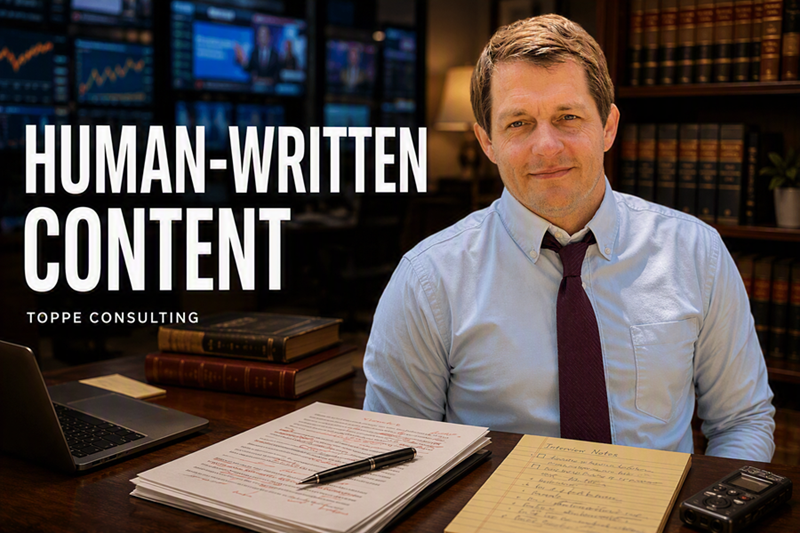
Need Content Written by a Human? Meet Joe Toppe

Your Next Client Is Already Searching. Educational Content Is How They Find You.

Greenville’s Bar Is 126 Years Old. Charleston’s Was Already 201 When It Opened

AALS Convenes National Task Force as the Rules for Becoming a Lawyer Come Apart