
At A Crossroads: SC’s Housing Market Faces Mounting Affordability Pressures
Toppe Consulting – Your Source for Digital News & Trends in the Legal Industry
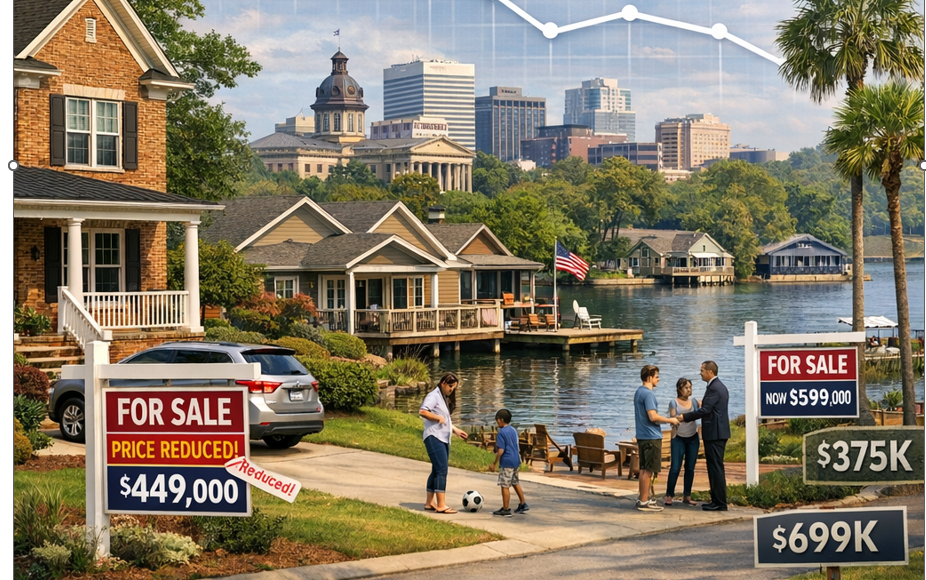
Housing affordability has become one of South Carolina’s most persistent and consequential economic challenges, and as the state looks ahead to 2026, the pressures shaping the housing market show little sign of easing.
South Carolina is one of the fastest-growing states in the nation, a trend that is expected to continue in the coming years. Strong in-migration from other parts of the country—driven by lifestyle appeal, relative tax advantages, and expanding employment opportunities—has fueled steady population increases across much of the state. According to recent U.S. Census Bureau population estimates, the state recorded the fastest growth rate in the nation for the second consecutive year. Growth is especially pronounced in and around Charleston, Greenville-Spartanburg, Columbia, Myrtle Beach, and Beaufort County, but rural and secondary markets are also seeing increased demand as buyers and renters look for more attainable options. This population growth translates directly into higher demand for housing, placing added pressure on an already undersupplied market and increasing the urgency for new construction.
However, the pace of new housing development has struggled to keep up. The lack of affordable housing remains a defining issue, particularly for first-time buyers, essential workers, and lower- to middle-income households. Construction Costs and Labor Shortages Reshape South Carolina Home Building explores how builders face these headwinds daily. While demand for housing continues to grow, new construction has been concentrated largely in higher price points, where builders are better able to offset rising costs. As a result, the gap between housing supply and affordability continues to widen.
Construction costs are a major contributor to this imbalance. Over the past several years, builders have faced sustained increases in the cost of labor, materials, land, insurance, and regulatory compliance. Skilled labor shortages have pushed wages higher in the construction sector, while materials costs—though more stable than during the height of recent disruptions—remain elevated compared to historical norms. Local zoning requirements, infrastructure fees, and permitting timelines further add to the cost and complexity of delivering new homes. These factors make it increasingly difficult to build entry-level or workforce housing at price points that align with what many South Carolinians can afford.
At the same time, household economics are under pressure. Wage growth has been relatively stagnant for a large portion of the workforce, particularly in sectors that are critical to the state’s economy but traditionally offer lower or moderate pay. Unemployment has edged higher, introducing additional uncertainty for households considering major financial commitments. For many residents, the challenge is not just affording a monthly mortgage payment, but saving for a down payment, managing existing debt, and maintaining financial stability in an uncertain economic environment. The National Association of Home Builders reports that 57% of American households cannot afford a $300,000 home based on current underwriting standards.
There are signs of modest relief. Interest rates have begun to trend downward, improving borrowing conditions and offering some buyers a clearer path to homeownership. Lower rates can reduce monthly payments and improve affordability at the margins, particularly for buyers who were previously priced out by higher financing costs. For builders and developers, declining rates may also support project feasibility by improving access to capital. Still, interest rates alone cannot resolve the underlying supply-demand imbalance.
Economic uncertainty continues to shape consumer behavior. Concerns about job security, inflation, and the broader economic outlook are causing many households to delay buying decisions, even as population growth sustains long-term demand. This dynamic creates a cautious market environment, where activity may fluctuate despite favorable financing conditions. What South Carolina Real Estate Attorneys Need to Know About 2026 Market Trends examines the legal implications of these shifting conditions.
Looking toward 2026, South Carolina’s housing market is likely to remain under significant strain. Continued population growth will keep demand elevated, especially in fast-growing regions where infrastructure and housing supply are already stretched. Without a meaningful increase in new construction—particularly affordable and workforce housing—prices and rents are likely to remain high relative to incomes. Addressing these challenges will require coordinated efforts across the public and private sectors, including policies that encourage higher-density development, reduce regulatory barriers, support workforce housing initiatives, and align economic development with housing planning.
The stakes extend well beyond housing itself. Affordability directly affects workforce availability, business recruitment, and long-term economic competitiveness. As South Carolina plans for 2026 and beyond, the central question is whether the state can expand housing supply quickly and efficiently enough to meet the needs of a growing population—while ensuring that the people who live and work in South Carolina can afford to stay.
How Toppe Consulting Supports Real Estate Law Firms
Real estate attorneys navigating this complex market need digital marketing that reaches clients at critical moments. Toppe Consulting provides SEO, website development, and Google Ads management designed specifically for law firms serving buyers, sellers, and investors across South Carolina.
Learn more:
About the Author
Jim Toppe is the founder of Toppe Consulting, a digital marketing agency specializing in law firms. He holds a Master of Science in Management from Clemson University and teaches Business Law and Marketing at Greenville Technical College. Jim also serves as publisher and editor for South Carolina Manufacturing, a digital magazine. His unique background combines legal knowledge with digital marketing expertise to help attorneys grow their practices through compliant, results-driven strategies.
Disclaimer
Toppe Consulting is a digital marketing agency. We do not provide legal advice. Consult a licensed attorney for legal matters.
Works Cited
National Association of Home Builders. “Nearly 60% of U.S. Households Unable to Afford a $300K Home.” NAHB, 21 Mar. 2025, www.nahb.org/blog/2025/03/priced-out-affordability-pyramid.
U.S. Census Bureau. “State Population Totals and Components of Change: 2020-2025.” Census.gov, Jan. 2026, www.census.gov/data/tables/time-series/demo/popest/2020s-state-total.html.
Related Articles
Recent Industry News

Will the Bermuda Triangle Claim Another Victim — and Leave Greenville With Egg on Its Face?
6 Rotten reasons injured workers need an attorney
Downtown Greenville, 2030, A Data-Driven Look at What Three Simultaneous Mega-Projects Will Have Built and What They Will Have Changed Forever

Greenville’s $500 Million Falls Park Conference District Is the Most Ambitious Development Bet in the City’s Modern History, And the Data Says It’s Long Overdue
