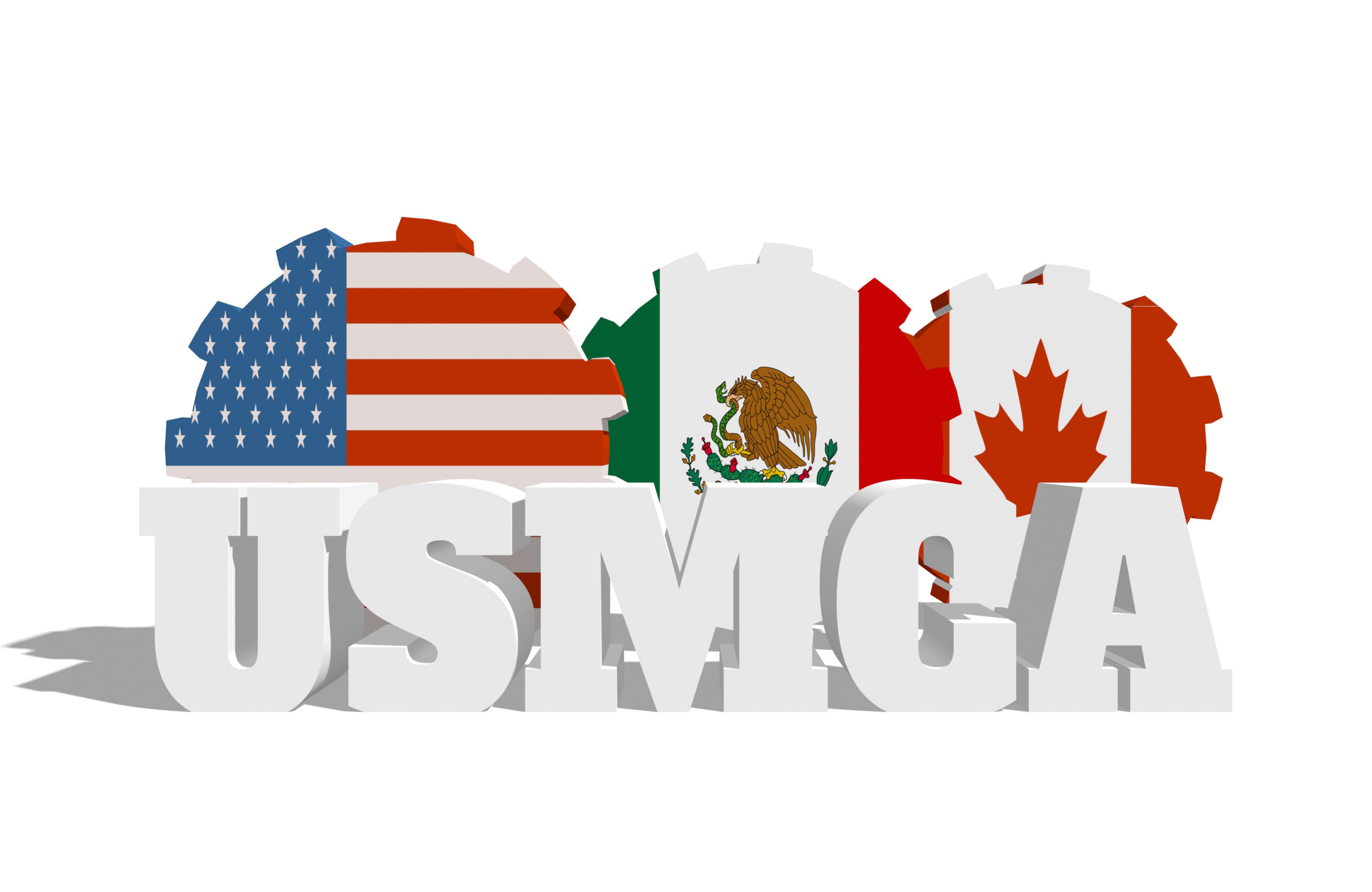
USMCA Review July 2026: What Every Manufacturer Needs to Know Now
Toppe Consulting – Your Source for Digital News & Trends in the Legal Industry
A deadline is approaching that could fundamentally alter how American manufacturers do business with their two largest trading partners. On July 1, 2026, the United States, Mexico, and Canada must complete a mandatory joint review of the USMCA trade agreement—a review that could result in the agreement’s renewal, significant modifications, or the beginning of a ten-year countdown to termination. For manufacturers who’ve built operations around duty-free North American trade, the stakes couldn’t be higher.
This isn’t a routine bureaucratic exercise. According to Brookings Institution analysis, the USMCA mandates that all three parties confirm in writing whether to extend the agreement for another 16-year term. Failure to reach agreement won’t immediately end the deal, but it will trigger annual reviews until 2036, when the agreement would terminate without unanimous consent to continue. That uncertainty alone could chill manufacturing investment across North America for years.
The current administration has signaled that all options remain on the table—including potential withdrawal. Trade Representative Jamieson Greer stated publicly that the agreement “could be exited, could be revised, could be renegotiated.” For manufacturers planning capital investments, hiring strategies, or supply chain restructuring, this uncertainty demands attention now, not after July 2026.
What the Review Actually Means for Manufacturers
The USMCA review represents more than a technical assessment of trade flows. According to CSIS analysis, what was expected to be a routine evaluation is now likely to become a high-stakes negotiation covering automotive rules of origin, Chinese investment restrictions, forced labor provisions, and ongoing implementation disputes. The administration views the review as leverage to address concerns extending well beyond traditional trade issues, including migration, drug trafficking, and continental defense.
For manufacturers, several provisions face potential modification. Automotive rules of origin—which currently require 75 percent North American content and 40-45 percent of auto content made by workers earning at least $16 per hour—could tighten further. Requirements that 70 percent of a vehicle’s steel and aluminum must originate in North America, with steel melted and poured domestically, could expand to other sectors.
The broader tariff environment, explored in 2026 Tariffs Are Forcing American Manufacturers to Rethink Everything, creates pressure that intersects directly with USMCA negotiations. Manufacturers already absorbing tariff costs on non-USMCA trade face potential additional complexity if the agreement itself becomes unstable.
How Manufacturers Should Prepare
Smart manufacturers are scenario planning across multiple outcomes. The best-case scenario—straightforward renewal with minor technical adjustments—would provide 16 years of trade certainty. The worst case—extended uncertainty or eventual termination—would force fundamental restructuring of North American supply chains. Most likely outcomes fall somewhere between, with targeted modifications to automotive provisions and new restrictions on Chinese involvement in North American manufacturing.
Regardless of outcome, manufacturers benefit from diversifying their market presence beyond customers who might be affected by trade disruptions. Building digital marketing capabilities that reach domestic customers, develop thought leadership positioning, and capture reshoring-focused search traffic creates resilience against trade uncertainty.
The companies actively reshoring operations, as detailed in Reshoring vs. Nearshoring: Which Strategy Actually Protects Your Supply Chain in 2026, may find themselves well-positioned regardless of USMCA outcomes. Domestic production eliminates tariff exposure while potentially qualifying for government incentives designed to strengthen American manufacturing.
Toppe Consulting: Your Manufacturing Digital Marketing Partner
At Toppe Consulting, we help manufacturers build digital presence that captures customers seeking reliable domestic suppliers—positioning that becomes increasingly valuable as trade uncertainty reshapes buyer priorities. Led by Jim Toppe, who holds a Master of Science in Management from Clemson University and publishes South Carolina Manufacturing, our team understands what manufacturing buyers need to see before requesting quotes.
Our Services Include:
- Manufacturing Digital Marketing Services – Complete digital marketing solutions that help manufacturers communicate their capabilities to customers prioritizing supply chain reliability
Ready to Capture Reshoring Opportunities? Contact Toppe Consulting to discuss how digital marketing can position your company for growth regardless of trade policy outcomes.
About the Author
Jim Toppe is the founder of Toppe Consulting, a digital marketing agency specializing in law firms. He holds a Master of Science in Management from Clemson University and teaches Business Law and Marketing at Greenville Technical College. Jim also serves as publisher and editor for South Carolina Manufacturing, a digital magazine. His unique background combines legal knowledge with digital marketing expertise to help attorneys grow their practices through compliant, results-driven strategies.
Works Cited
“The US Has Formally Started Joint Review of USMCA.” Brookings Institution, 23 Sept. 2025, www.brookings.edu/articles/the-us-has-formally-started-joint-review-of-usmca/. Accessed 16 Dec. 2025.
“USMCA Review 2026.” Center for Strategic and International Studies, 20 Aug. 2025, www.csis.org/analysis/usmca-review-2026. Accessed 16 Dec. 2025.
Related Articles
Recent Industry News

AALS Convenes National Task Force as the Rules for Becoming a Lawyer Come Apart
Five Retire, Two Replace: The Trades Gap Is Quietly Rewriting Injury Caseloads

Will the Bermuda Triangle Strike Again?

Civil Legal Aid Faces a Second Straight Year on the Budget Chopping Block