Toppe Consulting – Your Source for Digital News & Trends in the Legal Industry
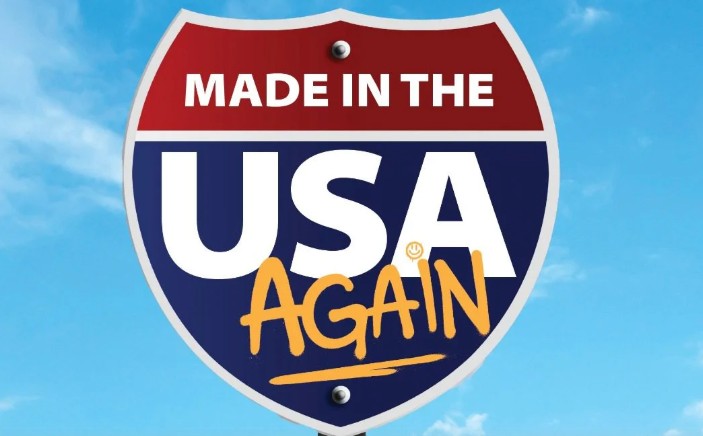
American manufacturing is experiencing a sourcing revolution not seen in decades. After years of chasing the lowest production costs across global supply chains, manufacturers are pulling operations closer to home at unprecedented rates. The question facing operations leaders isn’t whether to restructure supply chains—it’s how aggressively to move and where to land. Reshoring to domestic facilities and nearshoring to Mexico or Canada each offer distinct advantages, but the right choice depends on factors that extend well beyond simple cost comparisons.
The shift is already measurable. According to the Xometry 2026 Manufacturing Outlook, 74 percent of manufacturing executives are either reshoring or planning to reshore operations. Domestic sourcing on major industrial platforms has grown 28 percent, while U.S. aluminum sourcing has surged 63 percent since early 2025. These aren’t tentative pilot programs. They represent strategic commitments to fundamentally different supply chain architectures.
The momentum reflects hard lessons from recent disruptions. Pandemic supply chain failures exposed vulnerabilities that decades of cost optimization had created. Geopolitical tensions added risk premiums that erased supposed savings from distant sourcing. And ongoing tariff uncertainty, detailed in 2026 Tariffs Are Forcing American Manufacturers to Rethink Everything, has made total cost calculations far more complex than simple landed cost comparisons.
The Real Math Behind Reshoring Decisions
Cost comparisons between offshore and domestic production have historically favored overseas options, but those calculations frequently miss critical factors. The Reshoring Initiative’s 2024 Annual Report shows that 244,000 U.S. manufacturing jobs were announced in 2024 through reshoring and foreign direct investment, continuing momentum that has brought over 2 million jobs since 2010. Companies making these decisions aren’t ignoring economics—they’re calculating total cost of ownership rather than simple manufacturing cost.
Only 30 percent of manufacturers use total cost of ownership analysis when comparing domestic to offshore sourcing. Most rely on plant-level costs or landed costs that miss critical factors: quality failures requiring rework, inventory carrying costs for long supply chains, intellectual property risks, expedited shipping when schedules slip, and management time spent coordinating distant operations. These hidden costs often add 20-30 percent to actual offshoring expenses.
The USMCA review adds another variable to nearshoring calculations. As explored in USMCA Review July 2026: What Every Manufacturer Needs to Know Now, the trade agreement governing duty-free access to Mexican and Canadian production faces mandatory review in July 2026. Potential modifications to rules of origin or tariff structures could affect the economics of nearshoring arrangements currently in development.
When Each Strategy Makes Sense
Full reshoring to domestic facilities makes strongest sense when manufacturers need tight integration between engineering and production, when intellectual property protection matters, when customers prioritize domestic content, or when speed-to-market creates competitive advantage. The premium for domestic production shrinks when factoring in eliminated shipping times, reduced inventory requirements, and avoided tariff exposure.
Nearshoring to Mexico or Canada offers middle-ground advantages: lower labor costs than domestic production, geographic proximity that reduces transit times and enables frequent site visits, and (currently) duty-free access under USMCA. For manufacturers whose cost structures can’t support full domestic production, nearshoring provides supply chain simplification without the premium of U.S. wages.
The talent dimension increasingly favors reshoring. The Reshoring Initiative’s survey found that workforce availability—specifically skills gaps and labor shortages—has become the top challenge manufacturers cite, surpassing tariffs and regulations. Companies reshoring successfully are those investing in workforce development alongside facility construction.
Positioning for the Reshoring Wave
Manufacturers who’ve already restructured their supply chains domestically hold marketing advantages that will compound over time. Customers actively seeking American-made suppliers are searching online—and the manufacturers appearing in those search results will capture disproportionate opportunity. Digital presence that communicates domestic capabilities, certifications, and capacity positions companies to benefit from reshoring demand regardless of their specific industry vertical.
Toppe Consulting: Your Manufacturing Digital Marketing Partner
At Toppe Consulting, we help manufacturers communicate their capabilities to buyers actively seeking domestic and North American suppliers. Whether you’ve already reshored, are mid-transition, or evaluating options, your digital presence should reflect your competitive positioning. Led by Jim Toppe, who holds a Master of Science in Management from Clemson University and publishes South Carolina Manufacturing, our team understands how manufacturing buyers research and evaluate suppliers.
Our Services Include:
- Manufacturing Digital Marketing Services – Complete digital marketing solutions that help manufacturers capture customers prioritizing domestic supply chain reliability
Ready to Capture Reshoring Demand? Contact Toppe Consulting to discuss how digital marketing can position your company as the domestic supplier customers are searching for.
About the Author
Jim Toppe is the founder of Toppe Consulting, a digital marketing agency specializing in law firms. He holds a Master of Science in Management from Clemson University and teaches Business Law and Marketing at Greenville Technical College. Jim also serves as publisher and editor for South Carolina Manufacturing, a digital magazine. His unique background combines legal knowledge with digital marketing expertise to help attorneys grow their practices through compliant, results-driven strategies.
Works Cited
“2026 Manufacturing Outlook.” Xometry, Sept. 2025, www.xometry.com/manufacturing-outlook-2026/. Accessed 16 Dec. 2025.
“Reshoring Initiative 2024 Annual Report Including 1Q2025 Insights.” Reshoring Initiative, 9 June 2025, reshorenow.org/june-9-2025/. Accessed 16 Dec. 2025.